
Find 2 Star Hotels in Nikiski, AK from AED 259
 Change your mindBook hotels with free cancellation
 Be pickySearch almost a million properties worldwide
Check availability on Nikiski 2 Star Hotels
Our top choices for Nikiski 2-star hotels


8.6 out of 10, Excellent, (806 reviews)
"Great experience. Only negative is the hot tub was out of service during our stay. "

Chris


9.0 out of 10, Wonderful, (719 reviews)
"super place to stay"
lynn



7.6 out of 10, Good, (532 reviews)
"Bed was good, breakfast was good, staff was friendly."
Peter


8.2 out of 10, Very Good, (381 reviews)
"Friendly staff, clean rooms "
Jenny
The price is AED 460
AED 505 total
includes taxes & fees
17 Feb - 18 Feb
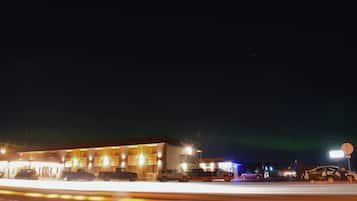


8.6 out of 10, Excellent, (302 reviews)
"Staff was helpful and friendly checkk-in was easy peezy"
Joseph
The price is AED 342
AED 362 total
includes taxes & fees
22 Feb - 23 Feb
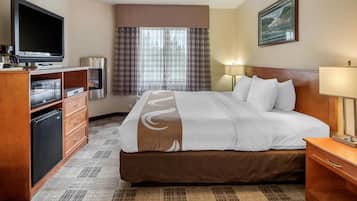
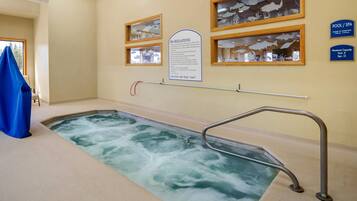

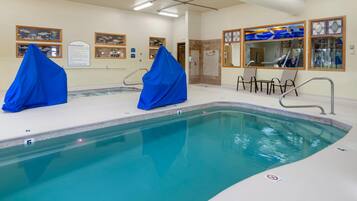
8.4 out of 10, Very Good, (576 reviews)
"Great place to stay"
Robin
The price is AED 397
AED 421 total
includes taxes & fees
1 Mar - 2 Mar

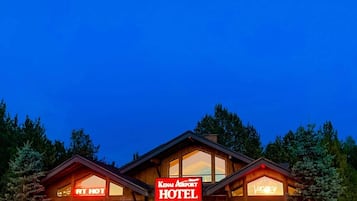


9.2 out of 10, Wonderful, (329 reviews)
"The staff is extremely helpful!"
Caleb
The price is AED 393
AED 417 total
includes taxes & fees
16 Feb - 17 Feb


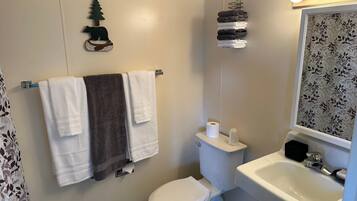
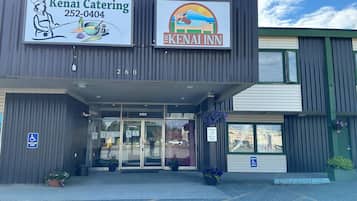
8.4 out of 10, Very Good, (48 reviews)
"Clean room, easy check in, close shopping for walking, quiet and felt safe"
Jay
The price is AED 383
AED 406 total
includes taxes & fees
16 Feb - 17 Feb
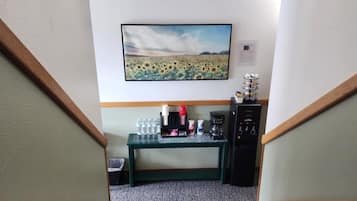




















Save an average of 15% on thousands of hotels when you're signed in
Explore similar 3-star hotels
Many 3-star hotels have the same amenities as 2-star hotels. See all 3-star hotels in Nikiski.
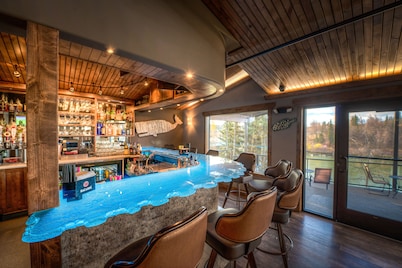
Kenai River Lodge
393 Riverside Drive Soldotna AK
The price is AED 441 per night from Feb 16 to Feb 17
AED 441
AED 485 total
16 Feb - 17 Feb
includes taxes & fees
8.2/10 Very Good! (742 reviews)


Still don't see what you're looking for?
See all properties in Nikiski.
You can also use these popular filters to refine your search.
Lowest nightly price found within the past 24 hours based on a 1 night stay for 2 adults. Prices and availability subject to change. Additional terms may apply.
Learn more about Nikiski
Explore secluded Nikiski: its canoeing, water park, camping, and more!
![The Arctic Circle is one of the five major circles of latitude that mark maps of the Earth. As of 16 February 2015, it runs 66°33′45.6″ north of the Equator.
The region north of this circle is known as the Arctic, and the zone just to the south is called the Northern Temperate Zone. The equivalent polar circle in the Southern Hemisphere is called the Antarctic Circle.
The Arctic Circle is the southernmost latitude in the Northern Hemisphere at which the sun can remain continuously above or below the horizon for 24 hours (at the June solstice and December solstice respectively). North of the Arctic Circle, the sun is above the horizon for 24 continuous hours at least once per year (and therefore visible at midnight) and below the horizon for 24 continuous hours at least once per year (and therefore not visible at noon). On the Arctic Circle those events occur, in principle, exactly once per year, at the June and December solstices, respectively. However, in practice, because of atmospheric refraction and mirages, and because the sun appears as a disk and not a point, part of the midnight sun may be seen on the night of the northern summer solstice up to about 50′ (90 km (56 mi)) south of the Arctic Circle; similarly, on the day of the northern winter solstice, part of the sun may be seen up to about 50′ north of the Arctic Circle. That is true at sea level; those limits increase with elevation above sea level, although in mountainous regions there is often no direct view of the true horizon.
The position of the Arctic Circle is not fixed. It directly depends on the Earth's axial tilt, which fluctuates within a margin of 2° over a 40,000-year period,[2] notably due to tidal forces resulting from the orbit of the Moon. The Arctic Circle is currently drifting northwards at a speed of about 15 m (49 ft) per year; see Circle of latitude for more information.
#snow](https://images.trvl-media.com/place/6140564/a9f9449e-bab4-40a6-a9a1-5356b0cc2aa8.jpg?impolicy=fcrop&w=900&h=675&p=1&q=high)
Photo by Sharrie Shaw
Open Photo by Sharrie Shaw