
Colchani
Travel Guide
Visit Colchani
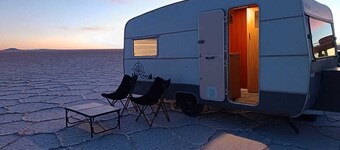
Camper Elegance Uyuni
Salar de Uyuni Colchani Departamento de Potosí
The price is AED 4,611 per night from Oct 22 to Oct 23
AED 4,611
AED 4,611 total
22 Oct - 23 Oct
Stay at this tentalow in Colchani. Enjoy free breakfast and daily housekeeping.

Hostal Cagnapa Restobar
Av. Avaroa 322 Uyuni Departamento de Potosí
The price is AED 214 per night from Oct 22 to Oct 23
AED 214
AED 214 total
22 Oct - 23 Oct
Stay at this hotel in Uyuni. Enjoy free WiFi, breakfast (surcharge), and an airport shuttle (surcharge). Popular attractions Pulacayo and Plaza Arce are located ...
9/10 Wonderful! (104 reviews)
"The room was spacey and charming. Love the arts on the wall and lightings. Only thing I was bothered was that I could hear neighbors room’s TV sound really loud."
Reviewed on 8 September 2026

Hotel de Sal Luna Salada
25 kms away from Uyuni town Uyuni
The price is AED 799 per night from Oct 24 to Oct 25
AED 799
AED 799 total
24 Oct - 25 Oct
Book a stay at this spa hotel in Uyuni. Enjoy free breakfast, a full-service spa, and 2 bars/lounges.
8.6/10 Excellent! (551 reviews)
"The common areas (restaurant, lobby, lounge) are pleasant and well designed, and the amenities, including the sauna and pool, are genuinely enjoyable. The view over the Salar de Uyuni is lovely, and overall the place has a nice atmosphere. That said, it feels somewhat overpriced for what it is. The ..."
Reviewed on 14 October 2026
Lowest nightly price found within the past 24 hours based on a 1 night stay for 2 adults. Prices and availability subject to change. Additional terms may apply.

Enjoyable 2-bedroom apartment with WiFi in Uyuni
Uyuni Departamento de Potosí
Stay at this apartment in Uyuni. Enjoy free WiFi, breakfast (surcharge), and a fitness center. Popular attractions Archaeology and Anthropology Museum of the ...
10/10 Exceptional! (1 review)
M
"M"
Reviewed on 20 May 2025

THE LITTLE HOUSE APARTHOTEL
Colón Uyuni Departamento de Potosí
Stay at this aparthotel in Uyuni. Enjoy free breakfast, free WiFi, and housekeeping. Popular attractions Archaeology and Anthropology Museum of the Southern ...

Enjoyable 2-bedroom, 2-bathroom apartment with heating and Wi-Fi in Uyuni
Uyuni Potosí Department
Stay at this apartment in Uyuni. Enjoy laundry facilities. Popular attractions Train Cemetery and Pulacayo are located nearby.
Lowest nightly price found within the past 24 hours based on a 1 night stay for 2 adults. Prices and availability subject to change. Additional terms may apply.