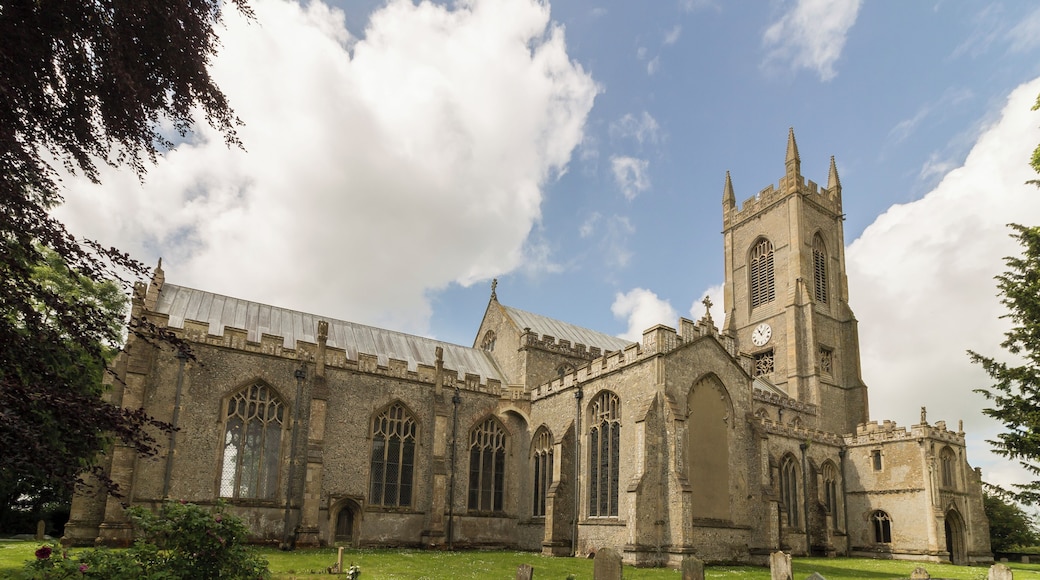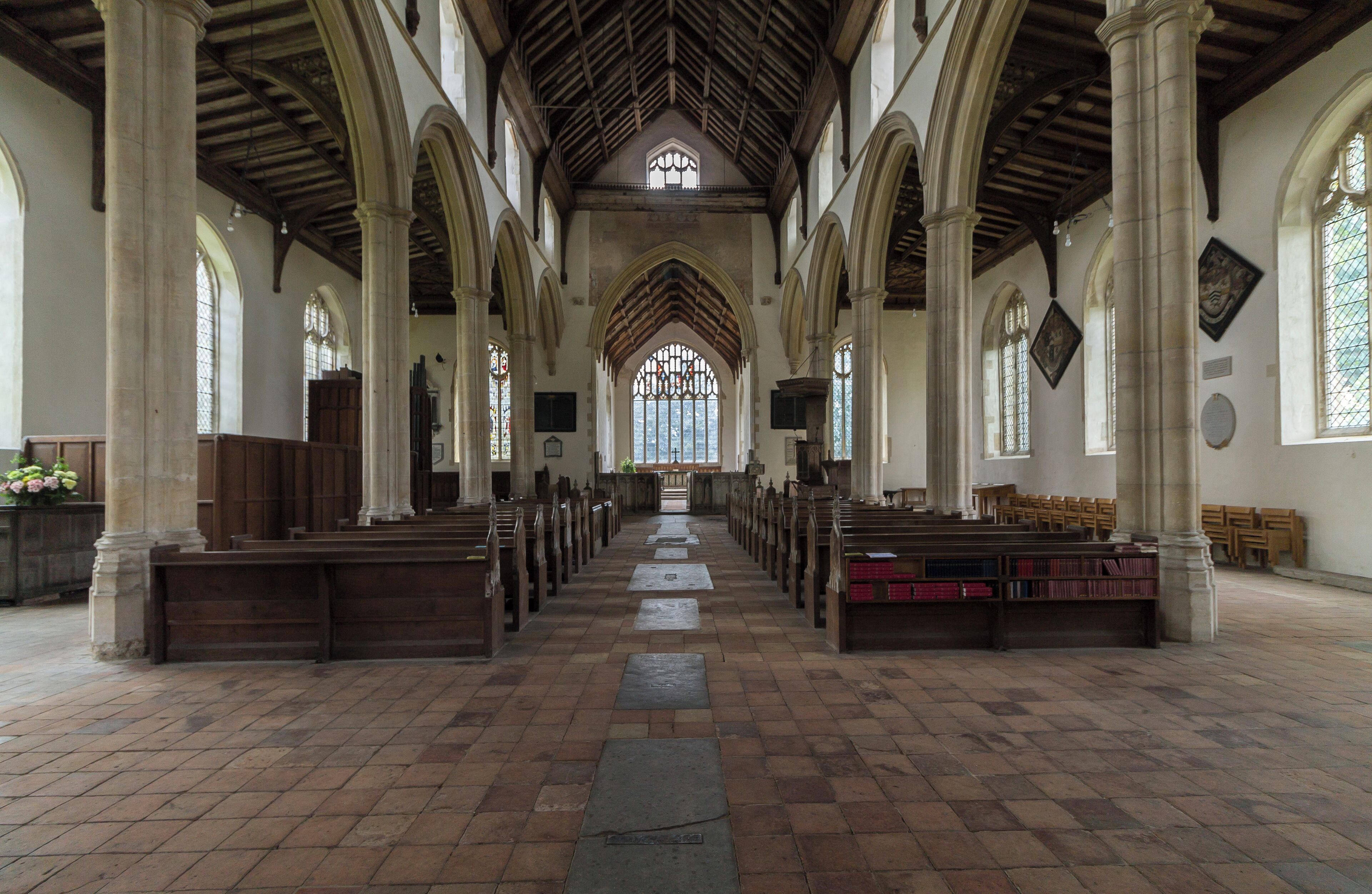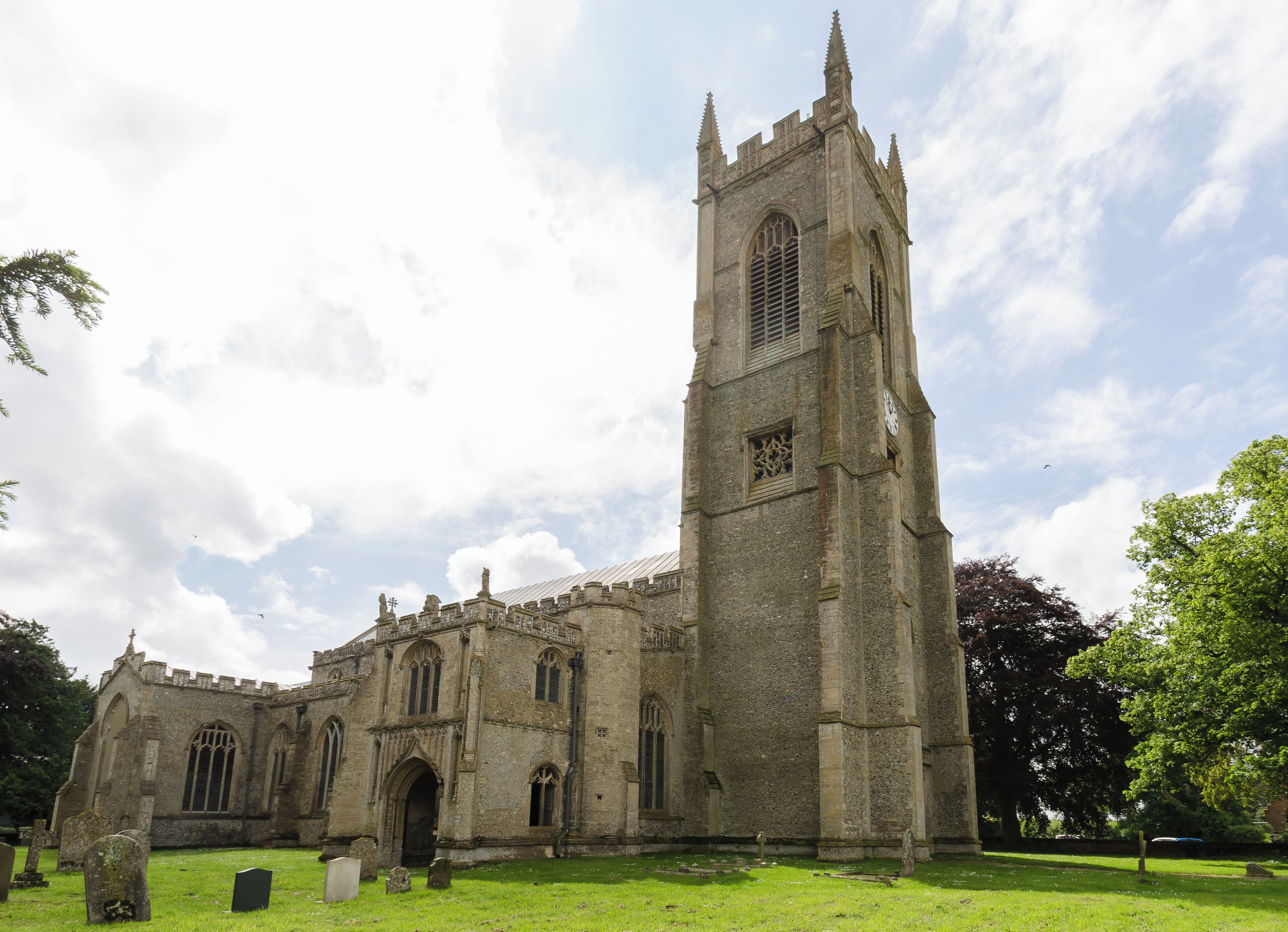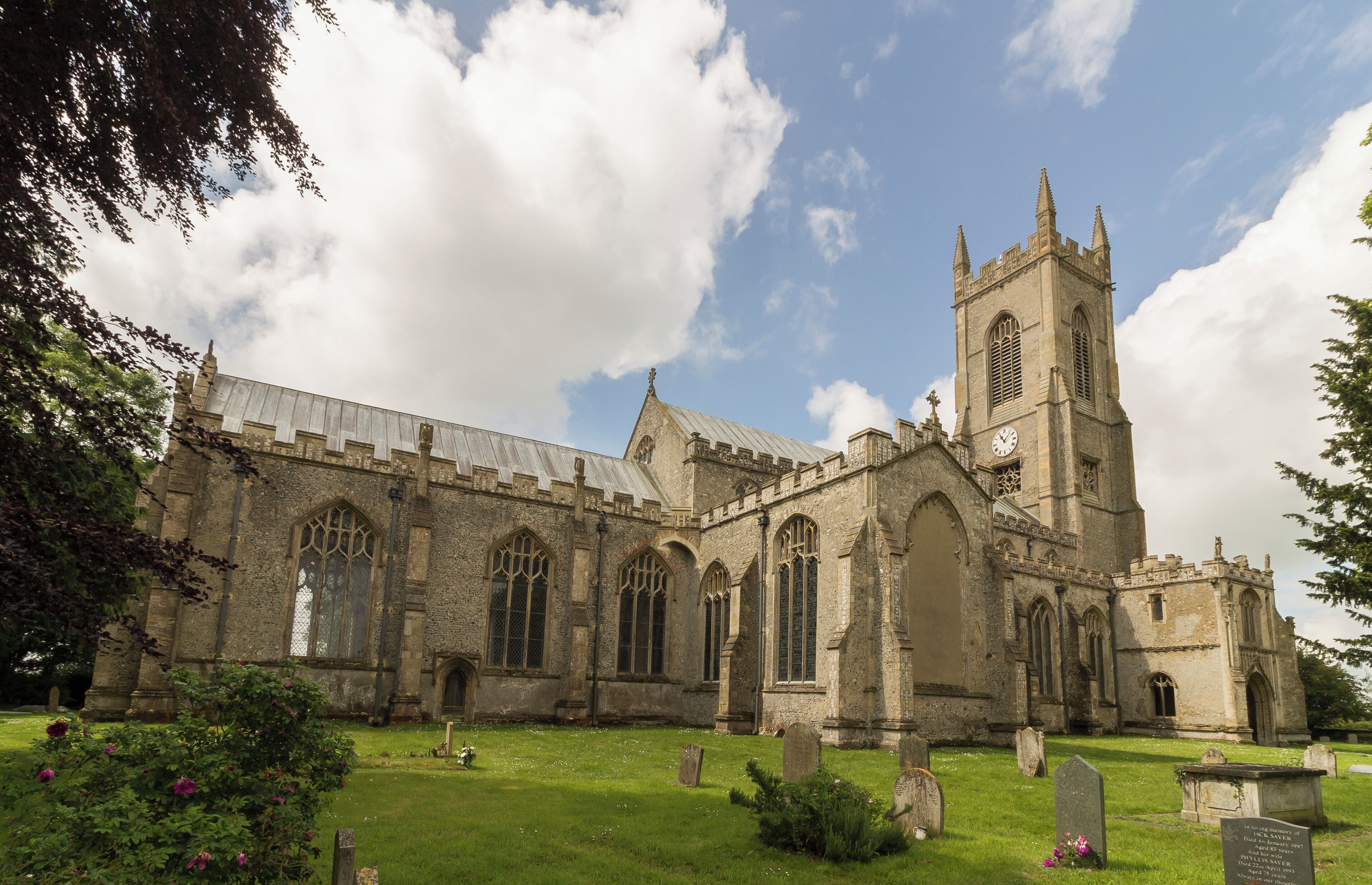
Reepham once had three churches almost touching each other, and two still stand. The main church is Saint Mary's, attached to this is St Michael's. The third church, All Saints' Hackford, was destroyed by fire in 1543 and the remnants mostly demolished in 1796. There is a small portion of the porch still extant opposite St Michael's tower. St Michael's church was the parish church of Whitwell until 1935 when the three parishes were amalgamated. It is now mainly used as a church hall. It has a tall west tower, nave, south porch and chancel which is linked to St Mary's church via a passageway. The tower is of two stages with battlements and pinnacles. Most of the church dates from the 14th and 15th century and has been recently converted into a church hall. At the east end there is a stained-glass window by Reginald Frampton. Saint Mary's church is a Grade I listed church dating from the 14th century, with a major restoration done in 1885. It is built of flint with a black pantile roof. There is a nave, north aisle, south porch, south tower (offset from the nave), south aisle and chancel. The clerestory was removed and the nave roof rebuilt circa 1790. The north arcade dates from the 14th century and has four bays with octagonal piers. The south arcade dates from the 13th century and also has four bays. The chancel was rebuilt during the Victorian restoration. On the north wall there is a monument probably to Roger de Kerdiston, died 1337. He lies on a bed of pebbles and there are eight weepers below. There is also a brass to Sir William de Kurdiston (d. 1391) and his wife Cecily. There is a Norman font of Purbeck marble from around 1200 at the west end of the church. Some of the bench ends have poppy heads with mediaeval animal carvings. There is a small organ and some stained glass windows. At the west end there is a linking passage to St Michael’s church.
Grade I listed This large perpendicular church in a relatively remote location was built between around 1405 and 1420. It was financed by at least four Lords of Manors and other men with wealth acquired from wool. There were at least six Guilds Chapels, and a chaplain and clerks in each Chapel prayed daily for donors' souls. There is a west tower, north and south porch with parvises, nave with clerestory, north and south aisles, north and south transepts and chancel. The west tower is of four stages, the last stage was built around 1511. There is a west door with censing Angels and Shields over it. The centre of the tower has a "sound hole" with delicate tracery. The top has richly decorated battlements. There are eight bells. The north and south porches are of two storeys, with stair turret access. The north porch parvise has a vaulted ceiling with carved bosses. There is the remains of a piscina, and this was probably a Lady Chapel. The south porch has a standard beamed roof, and the parvise was probably a Treasury, as the timbers of the roof have iron bands for protection. The nave has six-bay arcades, the piers having four shafts. There is a tall clerestory, and a window over the chancel arch. The chancel has a seven light east window of plain glass with some mediaeval glass in the tracery depicting the nine orders of Angels. The south transept has a four light south window and a three light east window. There is some mediaeval glass in the traceries. The north transept, originally a Chapel of Thomas Rose, d. 1441, was restored in 1910 by Sir Alfred Jodrell. He donated three stained-glass windows, some of which have original glass in the tracery. The western window represents the history of the church. The top four lights of the west window contain a message "Hear this ye old men and give ear all ye inhabitants of the land, hath this been in your days or even in the days of your fathers?". The north window has been blocked. The roof, like many other East Anglian churches, has carved Angels, most of which retain the original painting. There are also carved roof bosses in the chancel with various scenes, e.g. Nativity, Last Supper etc. There is a tall tower arch with a ringing gallery at the base of the tower. This also houses a balustrade and crane supporting the font canopy, all done in carved wood with original colours. The octagonal font from circa 1437 depicts the Seven Sacraments and The Crucifixion. There is also an inscription recording the donors John and Agnes Luce. The figures at the base have been mutilated. The pulpit is originally from the 15th century and was converted into a triple-decker in 1611. The stalls have carvings on the armrests and misericords, and the benches have carved poppy heads. Little remains of the original screen, but the panels still retain original paint depicting the Doctors of the Church and The Apostles. There are several good brasses in the church, including a "shroud brass" to John Brigge, and one to Geoffrey Boleyn. At the end of the 19th century the church was in a poor state of repair. Sir Woolmer White and Sir Alfred Jodrell plus others funded repairs. The restoration was sympathetically done. There is a modest two manual organ which was presented by Sir Woolmer White in 1912. Pic by Jenny.
Grade I listed This large perpendicular church in a relatively remote location was built between around 1405 and 1420. It was financed by at least four Lords of Manors and other men with wealth acquired from wool. There were at least six Guilds Chapels, and a chaplain and clerks in each Chapel prayed daily for donors' souls. There is a west tower, north and south porch with parvises, nave with clerestory, north and south aisles, north and south transepts and chancel. The west tower is of four stages, the last stage was built around 1511. There is a west door with censing Angels and Shields over it. The centre of the tower has a "sound hole" with delicate tracery. The top has richly decorated battlements. There are eight bells. The north and south porches are of two storeys, with stair turret access. The north porch parvise has a vaulted ceiling with carved bosses. There is the remains of a piscina, and this was probably a Lady Chapel. The south porch has a standard beamed roof, and the parvise was probably a Treasury, as the timbers of the roof have iron bands for protection. The nave has six-bay arcades, the piers having four shafts. There is a tall clerestory, and a window over the chancel arch. The chancel has a seven light east window of plain glass with some mediaeval glass in the tracery depicting the nine orders of Angels. The south transept has a four light south window and a three light east window. There is some mediaeval glass in the traceries. The north transept, originally a Chapel of Thomas Rose, d. 1441, was restored in 1910 by Sir Alfred Jodrell. He donated three stained-glass windows, some of which have original glass in the tracery. The western window represents the history of the church. The top four lights of the west window contain a message "Hear this ye old men and give ear all ye inhabitants of the land, hath this been in your days or even in the days of your fathers?". The north window has been blocked. The roof, like many other East Anglian churches, has carved Angels, most of which retain the original painting. There are also carved roof bosses in the chancel with various scenes, e.g. Nativity, Last Supper etc. There is a tall tower arch with a ringing gallery at the base of the tower. This also houses a balustrade and crane supporting the font canopy, all done in carved wood with original colours. The octagonal font from circa 1437 depicts the Seven Sacraments and The Crucifixion. There is also an inscription recording the donors John and Agnes Luce. The figures at the base have been mutilated. The pulpit is originally from the 15th century and was converted into a triple-decker in 1611. The stalls have carvings on the armrests and misericords, and the benches have carved poppy heads. Little remains of the original screen, but the panels still retain original paint depicting the Doctors of the Church and The Apostles. There are several good brasses in the church, including a "shroud brass" to John Brigge, and one to Geoffrey Boleyn. At the end of the 19th century the church was in a poor state of repair. Sir Woolmer White and Sir Alfred Jodrell plus others funded repairs. The restoration was sympathetically done. There is a modest two manual organ which was presented by Sir Woolmer White in 1912.
Grade I listed This large perpendicular church in a relatively remote location was built between around 1405 and 1420. It was financed by at least four Lords of Manors and other men with wealth acquired from wool. There were at least six Guilds Chapels, and a chaplain and clerks in each Chapel prayed daily for donors' souls. There is a west tower, north and south porch with parvises, nave with clerestory, north and south aisles, north and south transepts and chancel. The west tower is of four stages, the last stage was built around 1511. There is a west door with censing Angels and Shields over it. The centre of the tower has a "sound hole" with delicate tracery. The top has richly decorated battlements. There are eight bells. The north and south porches are of two storeys, with stair turret access. The north porch parvise has a vaulted ceiling with carved bosses. There is the remains of a piscina, and this was probably a Lady Chapel. The south porch has a standard beamed roof, and the parvise was probably a Treasury, as the timbers of the roof have iron bands for protection. The nave has six-bay arcades, the piers having four shafts. There is a tall clerestory, and a window over the chancel arch. The chancel has a seven light east window of plain glass with some mediaeval glass in the tracery depicting the nine orders of Angels. The south transept has a four light south window and a three light east window. There is some mediaeval glass in the traceries. The north transept, originally a Chapel of Thomas Rose, d. 1441, was restored in 1910 by Sir Alfred Jodrell. He donated three stained-glass windows, some of which have original glass in the tracery. The western window represents the history of the church. The top four lights of the west window contain a message "Hear this ye old men and give ear all ye inhabitants of the land, hath this been in your days or even in the days of your fathers?". The north window has been blocked. The roof, like many other East Anglian churches, has carved Angels, most of which retain the original painting. There are also carved roof bosses in the chancel with various scenes, e.g. Nativity, Last Supper etc. There is a tall tower arch with a ringing gallery at the base of the tower. This also houses a balustrade and crane supporting the font canopy, all done in carved wood with original colours. The octagonal font from circa 1437 depicts the Seven Sacraments and The Crucifixion. There is also an inscription recording the donors John and Agnes Luce. The figures at the base have been mutilated. The pulpit is originally from the 15th century and was converted into a triple-decker in 1611. The stalls have carvings on the armrests and misericords, and the benches have carved poppy heads. Little remains of the original screen, but the panels still retain original paint depicting the Doctors of the Church and The Apostles. There are several good brasses in the church, including a "shroud brass" to John Brigge, and one to Geoffrey Boleyn. At the end of the 19th century the church was in a poor state of repair. Sir Woolmer White and Sir Alfred Jodrell plus others funded repairs. The restoration was sympathetically done. There is a modest two manual organ which was presented by Sir Woolmer White in 1912. Pic by Jenny.

أماكن مشهورة يمكنك زيارتها