
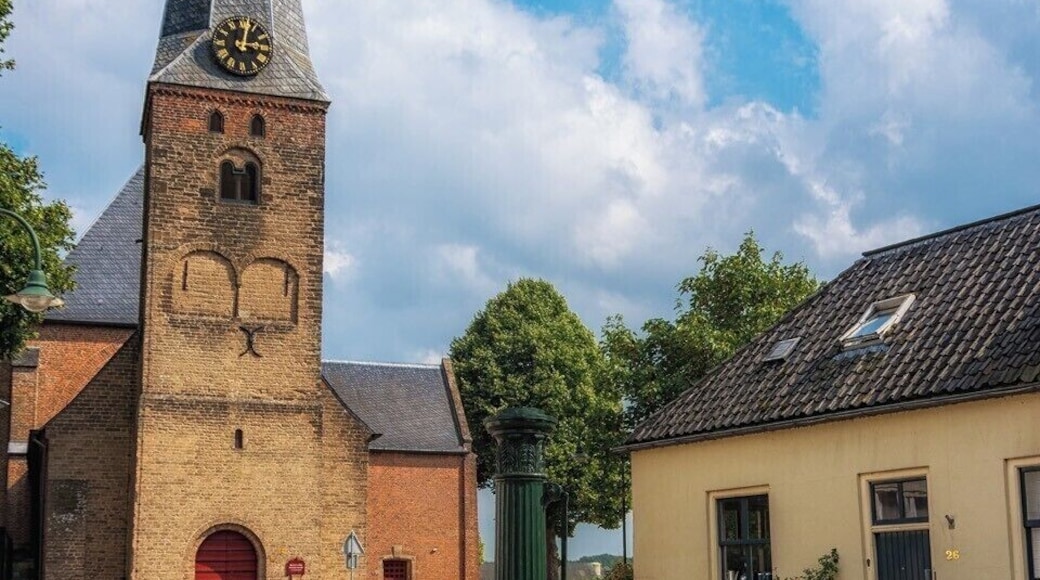
The village has a rich history, with many monuments. The former Dutch Reformed Church (now the Protestant Church, PKN) from the 14th century stands on a place already mentioned in a charter from 893 (known by a copy of Caesarius van Milendonk from 1222) under the goods of Prüm in the Eifel . The Prüm property was sold in 1609 by the States of Gelderland to Count Ernst Casimir of Nassau-Dietz.

There was a copper mill on the border with Klarenbeek. In 1870 the village had 68 inhabitants.

The village has a rich history, with many monuments. The former Dutch Reformed Church (now the Protestant Church, PKN) from the 14th century stands on a place already mentioned in a charter from 893 (known by a copy of Caesarius van Milendonk from 1222) under the goods of Prüm in the Eifel . The Prüm property was sold in 1609 by the States of Gelderland to Count Ernst Casimir of Nassau-Dietz.

There was a copper mill on the border with Klarenbeek. In 1870 the village had 68 inhabitants.